Lead follow-up and intake
A new inquiry gets a reply in seconds, lands in your CRM with the details already filled in, and goes to the right person. Miss a call and the caller gets a text back before they move on to the next business.

Every business has tasks that run the same way every time. The same first question answered, the same lead typed into the same spreadsheet, the same confirmation sent, the same reminder chased. Automation hands those to software so they happen right away, every time, without anyone having to remember. You keep the parts that need a person.
Repetitive tasks run on their own, and the work finishes faster.
Information stays accurate because nobody has to copy it twice.
Customers hear back sooner, which is usually what they remember.
Leads get followed up while they are still deciding.
Workflows shaped around how you already work, not a template.
There is no single AI product that fits every business. What works is picking the handful of tasks that eat your week and handing them over one at a time.
A new inquiry gets a reply in seconds, lands in your CRM with the details already filled in, and goes to the right person. Miss a call and the caller gets a text back before they move on to the next business.
Customers book online, pick from the times you are free, and get a confirmation right away. Reminders go out before the appointment, so fewer people forget they made one.
AI-assisted drafting for the writing you do over and over, and reports that build themselves from your Google Analytics, Search Console, and ad accounts instead of being pasted together by hand.
Your forms, CRM, email, calendar, spreadsheets, and invoicing passing information between each other, so the same details never get typed twice.
Workflows that save time, cut mistakes, and keep things moving without anyone chasing them. These are the ones businesses ask for most.
New leads go straight to your CRM and get followed up automatically.
Welcome emails, forms, contracts, and first tasks happen on their own.
Bookings, reminders, and follow-ups run without the back-and-forth.
Happy customers get asked to leave a review at the right moment.
Invoices are created, sent, and tracked without manual follow-up.
Leads and past clients hear from you without you writing each one.
Reminders, updates, and alerts go out by text, where people see them.
Files get named, filed, and shared without anyone dragging folders.
Tasks are created and assigned across your team as work comes in.
Reports build and send themselves, so you always know what is working.
A fair way to judge whether someone can automate your business is to look at what they have automated for their own.
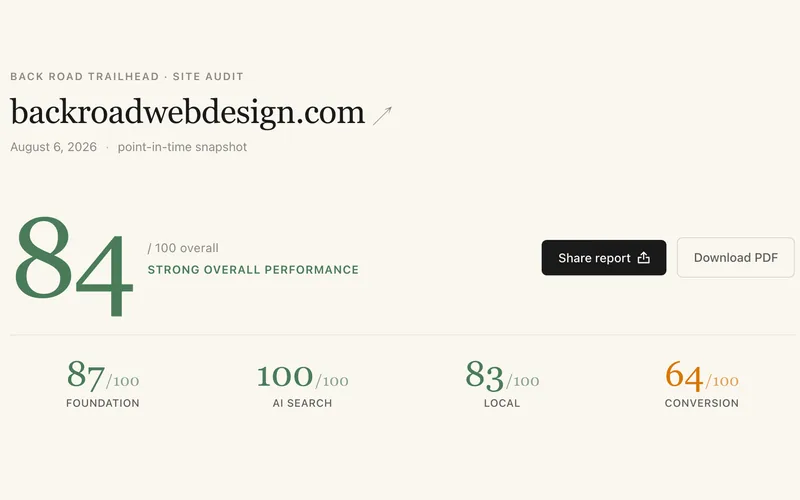
Give it a web address and it crawls the site, checks the technical fundamentals, and returns a scored report. It runs on Cloudflare's edge network, and nobody on my end presses a button.
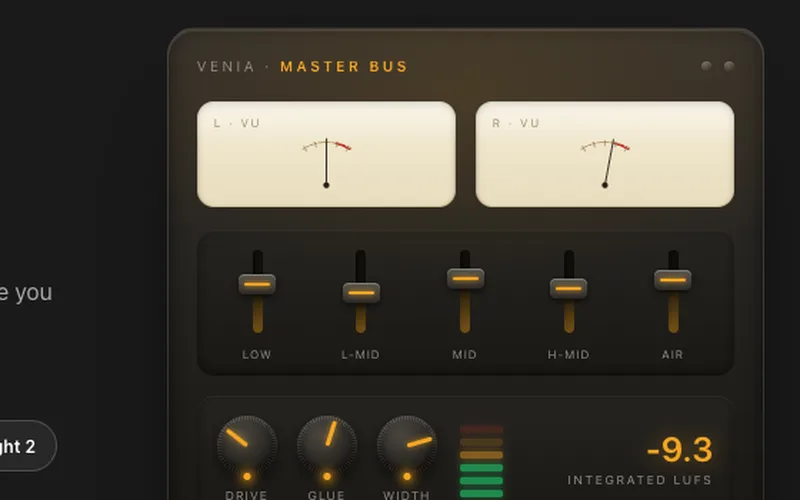
Drop in a track and it measures loudness, true peak, and tonal balance, then shows how Spotify, Apple Music, and YouTube will play it back. Everything runs in the browser, so nothing gets uploaded.
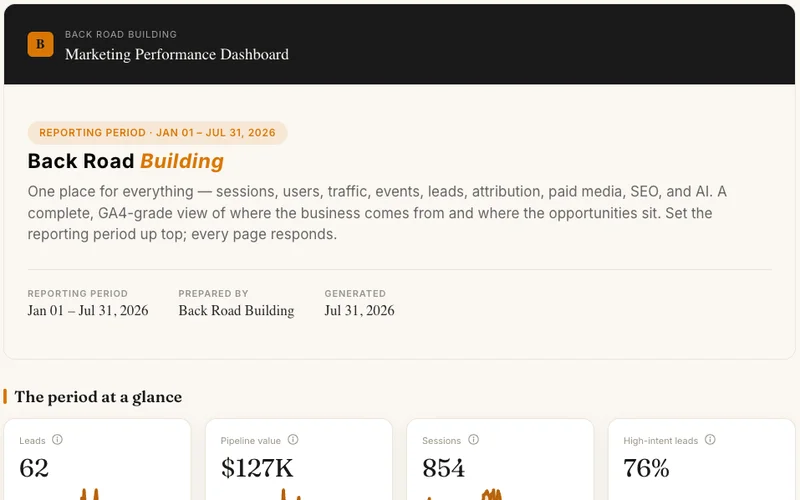
Each dashboard pulls its own numbers from Google Analytics, Search Console, and Google Ads on a schedule, then rebuilds itself and writes the plain-English summary at the top. There is also a box you can ask questions in, answered only from that account's own data.
It is software doing the repetitive parts of running your business, with AI handling the pieces that used to need a person to read something and decide. An inquiry comes in, the software reads it, sorts it, replies, files it, and tells you about it. You still make the decisions that matter. The software handles the steps in between.
No. Smaller businesses often get more out of it, because there is nobody whose job it is to catch the things that slip. If you are the person answering the phone, sending the quote, and doing the work, handing off even one of those tasks gives you back real hours in the week.
The test is whether a task happens the same way every time. Answering the same question, moving information from one place to another, sending something on a schedule, following up after a set number of days. Anything that needs judgment, taste, or a relationship stays with you.
That is not what I build. The work that gets handed to software is the work nobody wanted in the first place: retyping, chasing, remembering. Teams generally end up spending more time on what they were hired for, not less.
Usually very little. Most businesses already own more tools than they use, so the first pass is normally connecting what you have rather than replacing it. If something genuinely is missing, I will tell you what it costs before you commit to anything.
It depends on how many steps are involved and what your current tools allow. A single workflow is a small project. Connecting several systems that were never built to talk to each other is a bigger one. Rather than post a number that is wrong for your situation, I scope it after a conversation and give you a fixed price up front.
The easiest place to start is one task you do every week that nobody enjoys. Tell me what that is for your business and I will tell you whether it is worth automating and what it would take.